Posts

Negative Customer Feedback is the Greatest Gift

Image
My assistant came in today happy as a clam about the steak she had for dinner last night.  Hoping to score some great Iowa beef, I asked where she bought it.  "They were free" she said "because the chicken I had last week was terrible."  She went on to explain that her horrible chicken meal was such because it was stuffed with apples.  She complained to the Meat Manager who offered to give her an upgraded replacement and promised to be more forthcoming with signs and descriptions in the future.  This got me thinking about a customer focus group I assisted with last week, where I received an "ear full" of nasty news.  During one of the sessions, one of the customers asked for a one-on-one meeting with me concerning my client. I’m not sure if this particular customer woke up on the wrong side of the bed, was having severe heartburn from the Mexican buffet served prior to the session or was just cranky, but he decided to let me have it with both barrels of...

The First Time Call

Image
Let’s face it, for most salespeople getting into a new prospect is a tough job.  It takes persistence, requires lots of phone calls and typically puts the seller through an emotional wringer.  Discussions with hundreds if not thousands of distributor salespeople indicate this is one of the most difficult parts of their job.  First, it takes multiple (actually, our research shows seven) phone calls and email messages just to get to the right person.  Sadly, sellers, who are faint of heart, give up before the actual contact is made.  Many would rather put the task off and procrastinate for weeks.  Some, with established territories, simply refuse to make this kind of call until their managers apply massive pressure to open new accounts. The point is, lining up this kind of call is not on anyone’s top ten list of things to do.  There are dozens of articles on the topic of getting the appointment; my intent is not to provide a tutorial on the topic. ...

Explaining Sales to the New Executive

Image
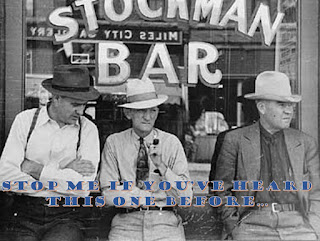
An Irishman, a Cowboy and a Salesman walked into a bar… Remember those jokes from days gone by?  It’s been a long time since salespeople needed to have a couple of good jokes up their sleeves.  And for some reason, I could never remember the punch lines.  Thankfully, the world changed and jokes soon fell out of favor with customers and sellers alike and my career didn’t suffer.  But, sometimes life mimics old jokes. Recently, I ran into a business executive in a local bar.  During the ensuing conversation, she shared her situation.  After years of climbing the corporate ladder and being groomed for bigger and better things, she finds herself in charge of her company’s sales effort.  Congratulations to her, but there was a problem.  She had no previous sales experience, no real exposure to the selling in any form and was struggling to understand how to make a difference in her new department.   I quipped that I work with sales gro...

Compensation/Commission Thoughts from Daniel Pink

Image
In case you haven’t noticed, we have been doing a lot of research on the topic of commission-based compensation plans.  During the discussion, topics from Daniel Pink’s Drive, The Surprising Truth about What Motivates Us keeps coming forward.  I recently re-visited parts of the book and wanted to share a few points to further ramp up the discussion of the matter.   The common belief is summarized by Pink this way:  “Rewarding an activity will get you more of it. Punishing an activity will get you less of it.”  This certainly falls in line with the sentiments of distributor managers.  When we asked the question,"Why do you employ commissions with your sales department?" the answer came back to drive both quality and quantity of effort (in that order.)  One-on-one examination of many plans revealed instances where distributors had applied greater rewards for selling select groups of products as well as rewards for selling into poorly performing or in...

Our customers need our services. If you don’t provide them who will?

Image
Last week I was honored to lead a discussion on fee-based services at the Association for High Technology Distribution ( AHTD.org ). For those of you not familiar with the group, allow me an introduction: AHTD is the trade association for distributors, Automation Solution Providers and manufacturers providing a long list of technical “products” (things like programmable controllers, software, sensors, motion control, machine vision and robotics) into the North American manufacturing segment. It’s a highly technical group and literally all members provide some very expensive products and service bundles. Historically, the members of this group have provided a wide array of both technical and logistical services to their customer base. Most openly admit salespeople are the gatekeepers for these services. Further, management oversight of service deployment ranges from “informal” to “talked about it in a sales meeting last year.” Ironically, even companies with well-developed...

Frank Hurtte Talks about Distributor Compensation

Image
Last month one of Frank’s Articles was featured on the front cover of Distribution Center Magazine. They liked it so much they decided to do an interview with Frank. Here are his personal comments: “Videos not only make you look ten pounds heavier, they make you look 100 years older. I guess my chances of becoming a key contributor to Fox News are pretty limited, so I’ll be hanging around the world of knowledge-based distribution for the foreseeable future.” While we had better not comment on the 10 pounds or 100 years, we do feel like many of our readers will enjoy seeing the interview.

Applying Black Belt Principles to the Pricing Process

Image
Created by Kues1 - Freepik.com Looking back at American manufacturing, a New Renaissance took place in the latter two decades of the 20th Century.  It started slowly, but by the mid-1990s, companies large and small began to apply principles tied to lean manufacturing and the related quest for continuous improvement. Coming out of the movement was the “Black Belt.”  Initially, Black Belts worked entirely within the manufacturing process; leading teams through what was once viewed as the hazy world of plant floor work and material flows. By the turn of the new millennium, the concept had been pushed to other processes. Things like order flows, procurement systems and even human-centric processes were scrutinized.  Similar to the manufacturing world, massive improvements were made.  Companies enjoyed new found efficiencies and gained a competitive advantage. One person saw the advantage of putting the same principle to work on the pricing process.  Enter ...